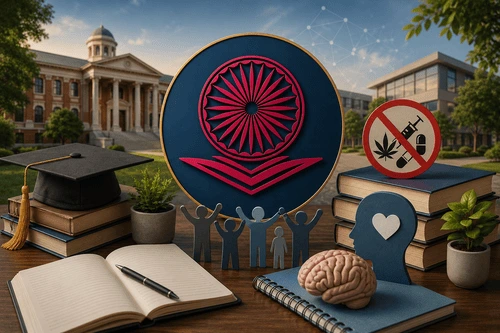
The UGC substance abuse prevention curriculum 2026 has been proposed by the University Grants Commission (UGC) to promote awareness, prevention and management of substance abuse among students in higher educational institutions.
The draft model curriculum, titled “Substance Abuse: Prevention and Management”, has been prepared under the Nasha Mukt Bharat Abhiyaan (NMBA). UGC has invited suggestions and comments from stakeholders on the proposed curriculum.
UGC Substance Abuse Prevention Curriculum 2026: Key Features of the Curriculum
The proposed course carries 2 credits and 30 hours and is divided into six major units. It is designed for both undergraduate (UG) and postgraduate (PG) students across academic disciplines.
The curriculum covers the neurobiological and psychosocial aspects of addiction, mental health vulnerabilities, substance-abuse prevention and relevant narcotic laws and policies. Students will also be introduced to early identification methods, validated screening tools and the Brief Intervention and Referral to Treatment (SBIRT) approach.
A practical component is also included. Students would be required to undertake at least five field activities, which may include visits to rehabilitation centres, interactions with experts and social media awareness campaigns.
Feedback Invited
UGC issued the public notice on August 11, 2026, and has invited stakeholder feedback within 15 days of the notice.
The proposed curriculum is suggestive, allowing higher educational institutions flexibility in deciding its implementation and credit distribution.
It is a proposed two-credit, 30-hour course focused on substance abuse prevention, awareness, management and community engagement.
The proposed course is intended for undergraduate and postgraduate students across all disciplines.
It is not yet clear whether the course will be compulsory. The draft suggests that higher education institutions may introduce it as part of their course offerings.